


Finding Ways to Cope
Jocelyn Gallagher
2019
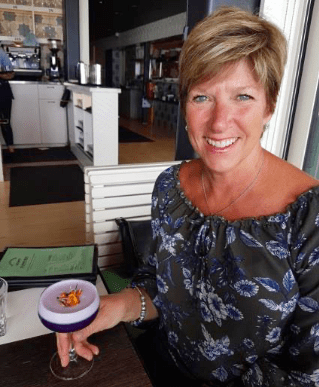
It was a humid summer morning on August 22, 2017, and I was winding up a three-day camping trip with my older sister. I had awoken before we left with a nasty respiratory infection, feeling so rough I thought I’d have to cancel the weekend. By Saturday, I’d felt much better. It had been a lovely weekend, filled with long walks, accompanied by our dogs, BBQ’s and talking late into the night around the blazing campfire, while the distant sounds of guitar playing wound its way to us through the tall pines.
“It’s strange but my fingertips are all tingly” I told my sister as we packed up the campsite, “I must have slept on my arm.” The next morning, I awoke excited as we were starting a family vacation. “Somethings not right,” I told my husband, “My left arm is completely numb.” As I rose from bed and walked my right knee wasn’t supporting my weight. So, off to emergency we went.
All the other standard tests such as blood, ECG, and so on were normal. “Please go Thom!” I pleaded with my husband to leave with our packed car and boys on vacation to Nashville. “Everything is okay and it’s probably just a nasty virus. I don’t want to go and make everyone sick!” Finally, after several attempts to convince him, he agreed, hugged me tight and left.
Change was rapid. Within a couple of hours, I was unable to walk without help and could no longer reach my own nose with my fingers, failing the hand eye coordination tests. I was checked into ICU overnight for observation and a consult with a neurologist arranged for the following morning. A small ICU, only three beds and a dedicated nursing station, but fortunately, I have a bed by a large window which displays a beautiful blue summer sky and though which I watch people arrive and depart the hospital. I wish I could leave. I feel emotions of anxiety and fear bubbling below the surface. What’s wrong with me?
The ICU nurse distracts me from my thoughts. ” When you need to use the washroom, I’ll help you over there using the wheelchair commode, understood? You are confined to bed, because we don’t want any falls or injuries. We put an alert on your bed that rings if you try to get out of bed. But I can trust you right?” I nod. “Well alright then, why don’t you try to nap this afternoon. The nights in ICU can be noisy and long, so you may not get the best sleep here.”
I’m exhausted, but sleep doesn’t come. As daylight falls away, the nurse moves to close the window curtains but I beg her to leave them open. Somehow, it feels less oppressive when I gaze at the sky and tall maples moving in the wind. Minutes drift into hours. The nurse checks my vitals every 30 minutes. The respiratory technician returns every four hours to conduct a breathing test. Time seems to have slowed down but everything and everyone around me moves fast. The ward is dark but very noisy. Other high-risk patients come and go throughout the night. An elderly voice continually yells to be taken home. A bed alarm goes off every few minutes. The man beside me breathes raspy gasps with such extreme effort that it scares me. I feel so apart from my normal reality and routine.
Find ways to cope practice self-care. It’s a long night. My thoughts start to race. To change my thinking, I manage after several tries, to hit the play button on my phone to listen to a voice guiding me through a “calming anxiety” meditation on my Calm app. The voice carries me through the noisy night and a fitful sleep. I turn up the volume to reduce the indirect stress caused by the medical emergencies within earshot. My physical aptitude declines through the night. It becomes very clear around 3 a.m. that I can no longer sit up on my own or turn over in bed. The nurse has raised the head part of the bed at a 45- degree angle, but I keep slipping down the slope each time I fidget and then need the nurse’s help to lift me up.
Just like a small infant, a pillow is tucked on either side of my waist up to my armpit to prop me so then I won’t fall sideways. An hour later, I don’t have the motor control to push the call button. I have my voice left to ask for help. This is scary. I listen to more meditation and soothing music. Think positively, you are in the right place and these people are experts. They are here to help.
The next morning, I go to another hospital to be seen by a neurologist. What does this mean? I am transferred from the bed to the gurney, strapped securely in with three large straps crisscrossing my immobile body and hoisted into the back of a medical transport vehicle. It feels so strange to be completely incapable. A kind nurse accompanies me on the trip. Two female attendants also ride with us. The ride is rough, but our pleasant conversation distracts me. Everyone is so kind and considerate. I am wheeled down the long corridors into an office and transferred to an examination bed. In walk two men.
“Please relax, as this will take about 45 minutes.” The neurologist explains as he repeats the sharp needle test done the previous day. He increases the number of places on my feet and legs and arms asking if I feel the touch. I continue to shake my head with each question. He frowns, walks over to the other man sitting beside at a large piece of technology and speaks to him in a low tone. Turning to me, smiling he begins to speak. “Ms. Gallagher, I’m not going to repeat any more of the physical tests already completed in emergency. Instead, we will do a nerve conduction study. Electrodes are taped to your skin above your nerves on your arms and legs. A small shock is passed through the nerve to measure the speed of the nerve signals. It doesn’t hurt, but you may feel a mild shock. It is harmless. Afterwards I will review the results and discuss then with you.”
A while later the tests are completed. The Dr returns and reviews the results on the screen. The two men speak in hushed tones, and then he walks across the room, turns slowly and looks at me squarely. “Mrs. Gallagher, I believe that you have what’s called Guillain Barre Syndrome or GBS. It’s very rare, approximately one in one hundred thousand people experience this. We know very little about it and it affects people very differently. It is an autoimmune disease, its onset usually triggered by a viral infection. I understand that you had an upper respiratory infection recently, so that may have been the cause. The body’s immune system goes into overdrive and attacks the myelin sheath surrounding the peripheral nerves. Our nerves receive signals sent from the brain and send the messages along the nerve so that we can eat, drive, walk, dance. With the myelin sheath compromised, the message cannot effectively be sent. In your case, the disease appears to be progressing quite rapidly. It can affect other functioning including the respiratory function” pausing he asks, “Do you understand?” So that’s why the continual breathing tests I think to myself as I slowly and silently nod.
Focus, you will recover. “Now we treat this disease with immunoglobulin therapy or IVIG. Intravenously, we give you healthy antibodies from blood that has been processed and treated so that only the strongest elements remain. The treatment lasts for about 6 hours per day over a five- day period. This will give your immune system a boost and we hope to reduce the progress of the disease. There is no cure but, in many cases, patients recover with little or no disability. I will prescribe the mixture and you will receive this at Georgetown Hospital as they are fully equipped to administer the treatment. If you require intubation because your body needs assistance to breathe, you will be transferred here.” Panic was stirring low in my core. For as long as I could remember I had possessed a fear of not breathing as after a serious bout of…. I developed asthma. I will keep breathing I said in my head with conviction. The doctor continued, “maybe we will get lucky with this early diagnosis and the IVIG will stop the disease from progressing. I will see you again in three days for a reassessment, but something tells me that I will be seeing you tomorrow as this disease seems to be moving very quickly. You will also receive a spinal tap today as this helps us in our diagnosis. But we will start the IVIG as we don’t want to waste time. Do you have any questions?”
I pull in a deep breath and ask, “Are there any risks with the treatment?”
“Well, yes, some patients develop an allergic reaction and we have to stop the treatment. In this case, we monitor the disease and its affect and provide support as best we can.”
How long? “How long does this GBS last?”
“After the first symptoms, the condition tends to progress for approximately two weeks. It can take up to four weeks to plateau, at which stage we see no new degeneration in your abilities. We have diagnosed it very early in your case. This is good however in each person the disease progresses on its own course.”
“Where will I go, when I stabilize?”
“Once we observe no new degeneration for a period of 7 days, we assess that you have entered the recovery phase and you will receive rehabilitation here at this hospital.” With that the doctor left the room.
Think positively. The other man continues to finish the testing. I stared up at the ceiling. “Would you like a tissue?” The technician asks as he pulls a tissue from a box and wipes tears away from my cheeks. I wasn’t aware that I had begun to cry quite noiselessly. He leaned in and touched my arm and began to speak softly to me.
“Mrs. Gallagher, may I call you Jocelyn?’ I nodded and he continued,” the Dr introduced me as Mr. Abe because I am not licensed to practice in Canada. But for thirty-two years in my country, I was a neurologist, and I have seen many cases of Guillain Barre. Yes, it is serious, but I can tell you that I have seen many miracles. To have faith in the most important thing. It is in God’s hands now. And it is also up to you. You can positively affect your outcome. Stress will not help you. You need to be positive. Have faith. I know that I will see you walk out of this office one day.”
“Thank you, doctor, what you said really resonates with me. Two years ago, I experienced a difficult time and the power of being positive, staying calm and not overthinking by using meditation really helped me get better.”
“You see”, he smiled, “you have the coping skills to apply in this circumstance, so use them.”
With that, the door opened, the nurse came to collect me for our return trip I began the fight for my life. I felt my fear ease as the kind man reassured me.
Do what you can to remain purposeful and engaged. When I returned from the neurologist assessment, my girlfriend visited, and noticing my challenges with using my phone, L said, “I’m going to show you how to use the dictation microphone so you can get emails and texts without having to use the keyboard.” I felt overjoyed that I could now manage to communicate with my worried kids on the west coast, who were texting me regularly. When L left, the night nurse gently explained that I may lose my ability to speak, and suggested I communicate any important messages to my family. I spent the next bit of time writing a note to my husband Thom pointing out the steps to take with my employer, where to find items for upcoming university bound children, what to do with our finances in case I didn’t survive and messages of love for each child. I felt empowered because I was being proactive in the area of my life most important to me, being a wife and mother. The phone rang instantly.
“What aren’t you telling me?” Thom asked anxiously.
“I’m sorry I scared you, I said and then explained the risks of how GBS could progress.
“I wish we hadn’t been convinced to leave you. We’ll be there early tomorrow.”
I could hear the fear in his voice. I tried to lighten our conversation to reassure him that I was going to fight like hell to be okay. I felt regret at convincing them to go on vacation.
I didn’t sleep much that night after the diagnosis. I had a job to do which was to will my body to keep breathing on its own. I listened to parts of a motivational audio book. I used guided meditation focusing on relaxation, breathing and self-compassion. I knew from previous experiences with adversity, that mindfulness and meditation would help me.
Ask for help. From, asking for a shower by my husband, letting my 12-year-old niece feed me dinner, crying on my son’s shoulder, letting the nurse wipe my bum after using the toilet to pulling me up in the bed when I had slipped between the rail. Don’t be afraid to tell your family and friends what you need or what you can’t do for yourself but need to or want to. They love you and want to help. They want to know how to help and need information from you about GBS and where you are at in the journey of disease or recovery. I asked a friend to take me to see the sunset. I asked for a supported wheelchair so I could rest my upper body and sleep as I was constantly at the bottom of the bed sliding down. Why sit up? Because I felt more in control. I could see the world and be in it, instead of staring at the ceiling.
Talk to someone. Whether it’s a spouse, a sibling, a therapist or a friend. You have experienced a traumatic event. It was quite shocking. The loss of independence was a real shift to my identity.
The importance of family and friends. My spouse Thom was a rock through this whole experience. A partner can help a person in distress see an alternative positive perspective, can listen, support, encourage and provide reassurance during extreme circumstances. The focus on family here is important as relationship and connectedness with family love and support is a vital source of resilience.1. Thom lightened my moods, brought his delicious home-made meals to the hospital, visited daily, reaffirmed his love, provided reassurance, rubbed my back, communicated with my employer and health insurance provider and managed our lives our responsibilities outside of GBS. My family and friends constantly reinforce that I mattered and was loved, no matter the outcome. My research found that sources of spirituality included religious faith, the natural world, inner strength and meaningful connectedness with others and that these elements of resilience play a vital role for both individuals and their family members in difficult times.2. Learning to let go. That was two years ago. It is now autumn. The colours of the leaves turned brilliant red, yellow and orange. The leaves have now floated down and rest decomposing at the base of the trees. I am now past the point of where the Dr said recovery happens. I still have significant nerve pain and take medication for it so I can function and sleep. I spoke to a fellow GBS survivor at the recent 2019 National Conference in Canada, who gave me hope, indicating that she was able to ditch the medication at three years. I spoke to others along the way who indicated that strength, endurance and subtle change in balance and coordination have been experienced well after the two-year mark. I have hope. Like the leaves the fall away from the tree, I am learning to let go of my version of my former self, at least for now. I am not alpine skiing yet and I loved my favourite sport and whizzing down the slopes. I have tried ice skating, but muscle strength and balance made it too difficult. I love winter sports, so I am going to try again this year! I am not able to move very fast and I have little reflexes so I must be gradual in my effort and careful. I am enjoying swimming again as the buoyancy of water is forgiving and it’s wonderful to fit in with the other swimmers without detection. There are great water therapy classes at many rehabilitation facilities. Recovery takes time. Be patient and enjoy something about each day. I have found it very supportive to my well-being to practice daily expressions of gratitude in the morning and in the evening before I go to sleep. I use an easy free app called the 5-Minute Journal. It prompts me to consider what I appreciate, set daily goals and self-affirming thoughts and reflect on what went well. I continue with yoga, walking, and eat certain nutritional ingredients that help my GBS affected digestive system continue to operate. My secret is Omega 3 oils and stewed prunes in my daily smoothie!
New pleasures emerge. I get stronger as I work at it! I have been enjoying longer and longer hikes, dog walks and bicycle rides. I challenged my fears and tried scuba diving this year! I accept, like the autumn leaves, my past skill level may, like my experience with GBS have left me, but each provided new energy and experience to who I am today, a resilient positive individual who has learned to slow down (emotions and stress make me imbalanced and uncoordinated!), take a deep breath, be patient and enjoy the present fully. I have learned to focus on the pleasures in the moment with my spouse and my family. I can stand strong like the maple, weather the storms and continue to look forward to a future of continued growth and a full life.

Submit a Story
Have you or a loved one experienced GBS, CIDP or MMN? We’d love to share your story with our community. Download our patient story guidelines below to get started.
Get The GuidelinesLearn from the Experts!
In these educational sessions, a wide range of doctors, specialists, therapists and other experts share in depth advice and information.
Watch The Videos