


Slow Down Stress Matters
Jenny Rybie
2020
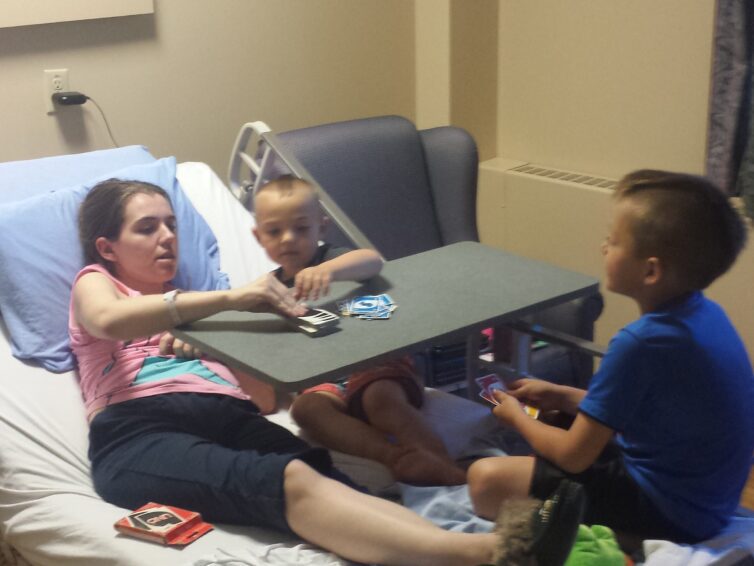
My first bout with GBS started December 10, 2009, when I was home on maternity leave.
It was the day after a hard karate workout. My arms and legs were weak and sore and I needed help to get out of bed. At first, I thought it was a result of the workout but my back muscles were pulled up tight like a set of window blinds and the pain and weakness increased everywhere. I reached my lowest point a few weeks later, on my 26th birthday. I fell down the stairs and lay there and cried because I couldn’t get up on my own.
Diagnosis took more than a month. It was finally determined I got GBS as a result of a flu vaccination. By now, I was regaining some strength. However, I had lost 20 pounds, mobility in most of my body, and could not even hold my nine-month-old. And, I was in pain. At the end of March, I went back to my job, part-time, as a social worker with high- risk youth.
But I still had facial pain when hugged or had pressure on my face. When my second son was born, in 2011, I learned, as the anesthetist gave me an epidural that didn’t work, that the GBS had made my back muscles “squishy.”
Round Two
In May 2015 my sons were three and six. On May 3, I started to feel pain in my lower legs and told my husband it felt like GBS, only worse. I went to three different ER’s three days in a row and was sent home each time with some form of pain med. The doctors said it would go away, it was stress, it was in my head. My husband would not give up. Finally, after a spinal tap, which showed GBS, I was admitted on May 7.
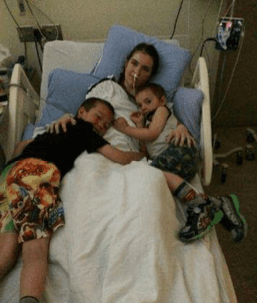
I spent the first three days on pain meds. On Mother’s Day I was transferred to ICU. I had a feeding tube as I could no longer swallow or move my mouth at all. Fortunately, the boys’ two grandmothers and their aunt looked after them. My husband would not leave my side. One pain med caused me to hallucinate, and I know family and friends visited me but I cannot remember who or when. I dimly remember receiving mass quantities of immune globulin through an IV and frequent visits from a respiratory therapist. I thought of my sons and breathed on command.
They moved me out of ICU on May 22.
The pain was unimaginable. My entire body was on fire with every touch or movement. It was overwhelming. I started physio in bed three times a week despite the pain. Slowly, slowly, parts of me gained mobility. On June 22, I moved into a transitional medical facility. I was the youngest person there by 40 years. It was depressing and I felt so alone. I decided I was not going to stay any longer than I had to.
My boys visited me once before I was in ICU but the younger was afraid to come near me. My heart broke. I have always been a strong, independent person. Losing the ability to care for myself, perform daily tasks, and to move any body part was difficult. I don’t like giving up control, and I lost all dignity in the hospital when nurses performed all the tasks, I should be able to do. I just stopped caring and resigned myself to the fact that I had no choice. I could feel myself fall into depression. But I knew I couldn’t give up because I had two boys who needed me.
First, I asked to be switched from injections to pills for my pain meds. I had no idea this change, a precursor to being allowed to go home, would be so drastic. It took more than a week to adjust to this change.
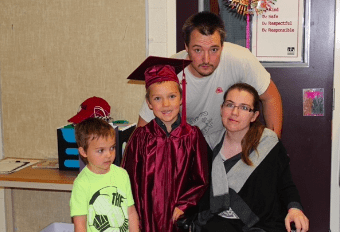
After the med change, I scheduled my first pass to attend my older son’s kindergarten graduation. My son’s face was the happiest I’d ever seen. After two hours I was exhausted.
On July 8, I went to a restaurant to celebrate my brother-in-law’s birthday. It was great, but I was tuckered right out after only an hour and fell asleep before I got to say goodbye to my boys.
That night I woke up disoriented and realized I hadn’t said goodbye. I started to sob uncontrollably. The staff gave me a sleep aid to help calm me down and fall asleep again.
The next day I spoke with my husband and we decided I would aim to be home by July 15. I was able to move myself around via wheelchair, I had taken a few steps with the help of my physiotherapists, and I was able to transfer from the bed to my wheelchair and from the chair to the toilet. I knew I could do this. The doctors agreed, with the plan that I would do physio on my own daily and that the local physio office would find me a referral.
My third pass was for my younger son’s fourth birthday on July 13. We spent time at home and went out for supper. It was the best day during those hard three months.
On July 15, my husband and kids picked me up and drove me home. I was never so happy to pull into our driveway. I continued on the meds I had been on before: two for nerve pain, and one for pain and to help me sleep.
The next few weeks were a blur. We hosted a summer camp for our karate students, and two amazing friends came to stay with us and help.
I went to doctor appointments and did my wheelchair exercises daily. Our family continued to help with my sons.
It was frustrating that it took two months for a physiotherapist to be assigned to my file. When the therapist finally came, the exercises were very basic. I had been a serious karate student, before GBS, and desired to challenge my body more. Slowly I started to walk on my own, and in October I started using a walker instead of my wheelchair.
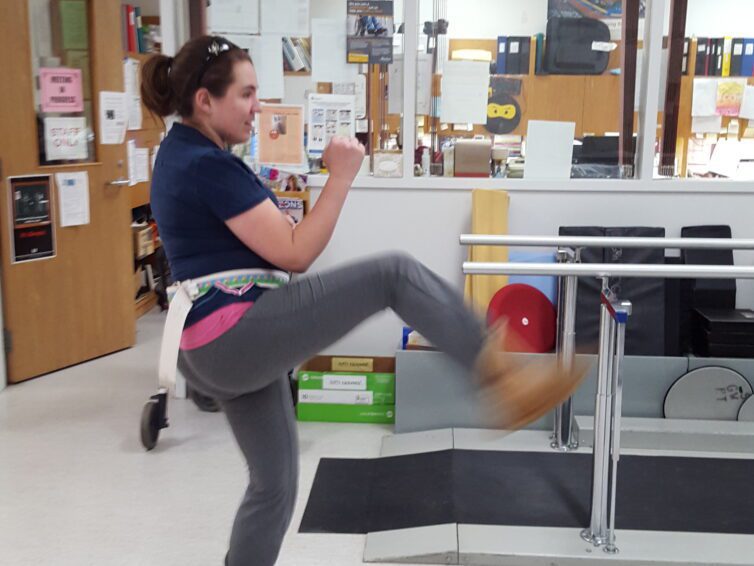
Over the next year I went to doctor appointments to experiment with pain medication and dosages. I started attending a rehab facility that was an hour away from home. I went twice a week for full days and completed classes to strengthen my hands, arms, and legs. They even helped me relearn some karate moves. I also met monthly with a psychologist who helped me focus on the future.
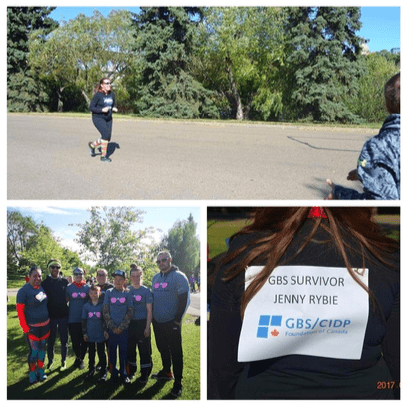
It was during this time that I found the GBS-CIDP Foundation support meetings. I was no longer alone.
Since 2017, I have been working towards returning to karate and to some kind of social work. I won’t be able to take up working with high-risk youth again. I continue to be tired all the time, and I nap daily if possible. I have slowly weaned off the pain meds, and remain on the pain/sleep aid as I struggle with sleep and still have nightmares about the hospital.
I assumed my sons would not really be affected by my GBS. Unfortunately, that is not the case. I have learned to be specific when I say I’m not feeling well, as they both think I am going to end up in hospital. I talk with them about stress and its effects, as the doctors believe extreme stress played a factor in my relapse. I have also tried to model self-care, positivity, and happiness. Now I tell the kids I need to take care of myself, and I’m just tired. I’m going to take a nap and then we’ll play. Every time I have to go to an appointment, I say I’m going so that when I come home, I can be a happier mom. I am hoping these lessons will be reflected in them as they grow up.

Submit a Story
Have you or a loved one experienced GBS, CIDP or MMN? We’d love to share your story with our community. Download our patient story guidelines below to get started.
Get The GuidelinesLearn from the Experts!
In these educational sessions, a wide range of doctors, specialists, therapists and other experts share in depth advice and information.
Watch The Videos